

DO-254 Certification Guide for FPGA and Complex Electronic Hardware
What is DO-254?
DO-254 (Design Assurance Guidance for Airborne Electronic Hardware) defines the process required to develop airborne electronic hardware with a level of rigor appropriate to its safety impact.
For FPGA-based systems, DO-254 is not just documentation—it is a full lifecycle discipline covering:
• Planning
• Requirements capture
• Design
• Implementation
• Verification
• Configuration management
• Process assurance
The objective is simple:
Demonstrate that the hardware performs its intended function with no unintended behavior, at the assigned Design Assurance Level (DAL).
Explore more about “What is DO-254?”
Design Assurance Levels (DAL)
• DAL A – Catastrophic failure condition
• DAL B – Hazardous
• DAL C – Major
• DAL D/E – Minor / No effect
For modern FPGA systems, most certification efforts target DAL A or B.
Explore more about “Design Assurance Levels (DAL)”
Why DO-254 is Challenging for FPGA
FPGAs introduce complexity that traditional hardware does not:
• Massive logic density
• Embedded processors (e.g., MicroBlaze)
• Third-party IP (often encrypted)
• Toolchain dependence (Vivado)
Key challenges:
• Traceability across abstraction layers
• Verification completeness (coverage)
• Tool qualification or mitigation
• COTS IP integration
Explore more about “Why DO-254 is Challenging for FPGA”
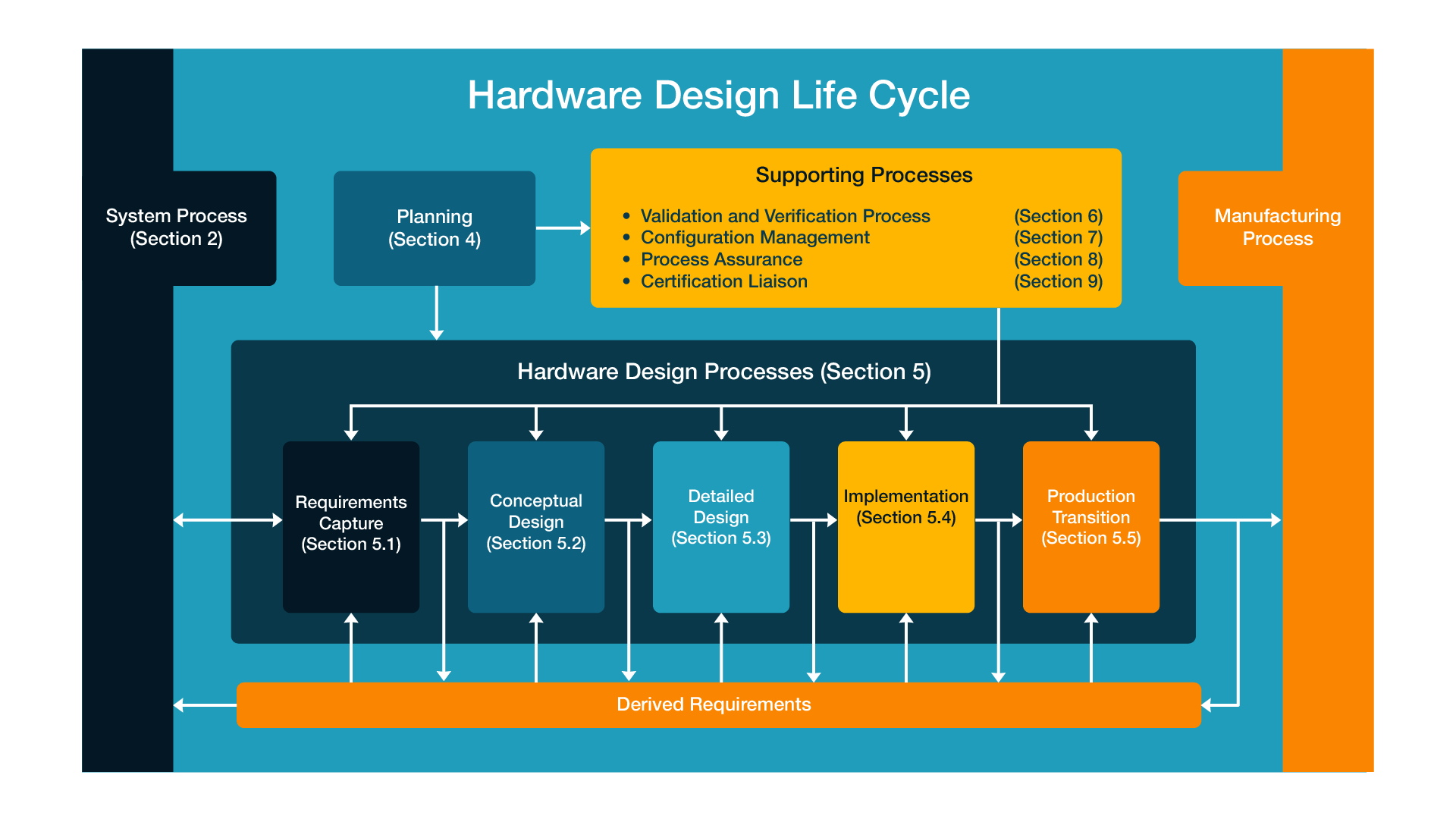
DO-254 Hardware Design Lifecycle
1. Planning
Core artifacts:
• PHAC
• HDP
• HVVP
• HCMP
These define how you will comply, not just what you will build.
⸻
2. Requirements
• Hardware Requirements (HRS)
• Derived requirements identification
• Bidirectional traceability
Common failure:
Requirements written at too high a level to verify.
⸻
3. Design
• High-Level Design (HLD)
• Detailed Design (HDD)
For FPGA:
• RTL architecture
• Clock domain crossings
• Reset strategies
• IP integration boundaries
⸻
4. Implementation
• RTL coding
• Constraints
• Synthesis considerations
Critical point:
Implementation must be traceable—not just functional.
⸻
5. Verification
This is where most programs fail or slip schedule.
Typical expectations:
• ≥ 90% structural coverage (DAL A target)
• Requirements-based testing
• Element-level verification
• Robust regression strategy
Key issue:
Late design changes invalidate coverage and artifacts.
⸻
6. Validation & Certification
Includes:
• SOI-1 through SOI-4 audits
• Test Readiness Review (TRR)
• Certification liaison engagement
DO-254 for COTS and FPGA IP
One of the most misunderstood areas.
Problem:
Most FPGA designs rely heavily on:
• AMD/Xilinx IP
• Third-party cores
• Embedded processors
These are typically:
• Encrypted
• Not developed under DO-254
Options:
1. Treat as COTS (limited credit)
2. Reverse engineer verification (inefficient)
3. Use certifiable IP with source access
⸻
Common Failure Modes
• Underestimating verification effort
• Poor requirements definition
• Late-stage design changes
• Inadequate coverage strategy
• Improper handling of third-party IP
⸻
What Actually Drives Schedule
Not coding.
The real drivers:
• Verification runtime (often days per regression)
• Coverage closure
• Requirements maturity
• IP integration complexity
⸻
©2026 Logicircuit, Inc. All rights reserved.
Where are you in your certification journey?
From early architecture decisions to final certification audits, every program faces challenges that can impact cost, schedule, and risk.
Whether you need certifiable FPGA IP, verification support, or complete DO-254 expertise, LogiCircuit can help you move forward with confidence.
Ready to move your program forward?
Whether you need certifiable FPGA IP, DO-254/178C consulting, verification support, or certification artifacts, our team can help.
Phone: 770-887-7293
Email: info@logicircuit.com
Request an Engineering Consultation

770-887-7293
Invoice Terms and Conditions
PO Terms and Conditions
Website Terms and Conditions
SafeIP™ License Agreement