

What is DO-254?
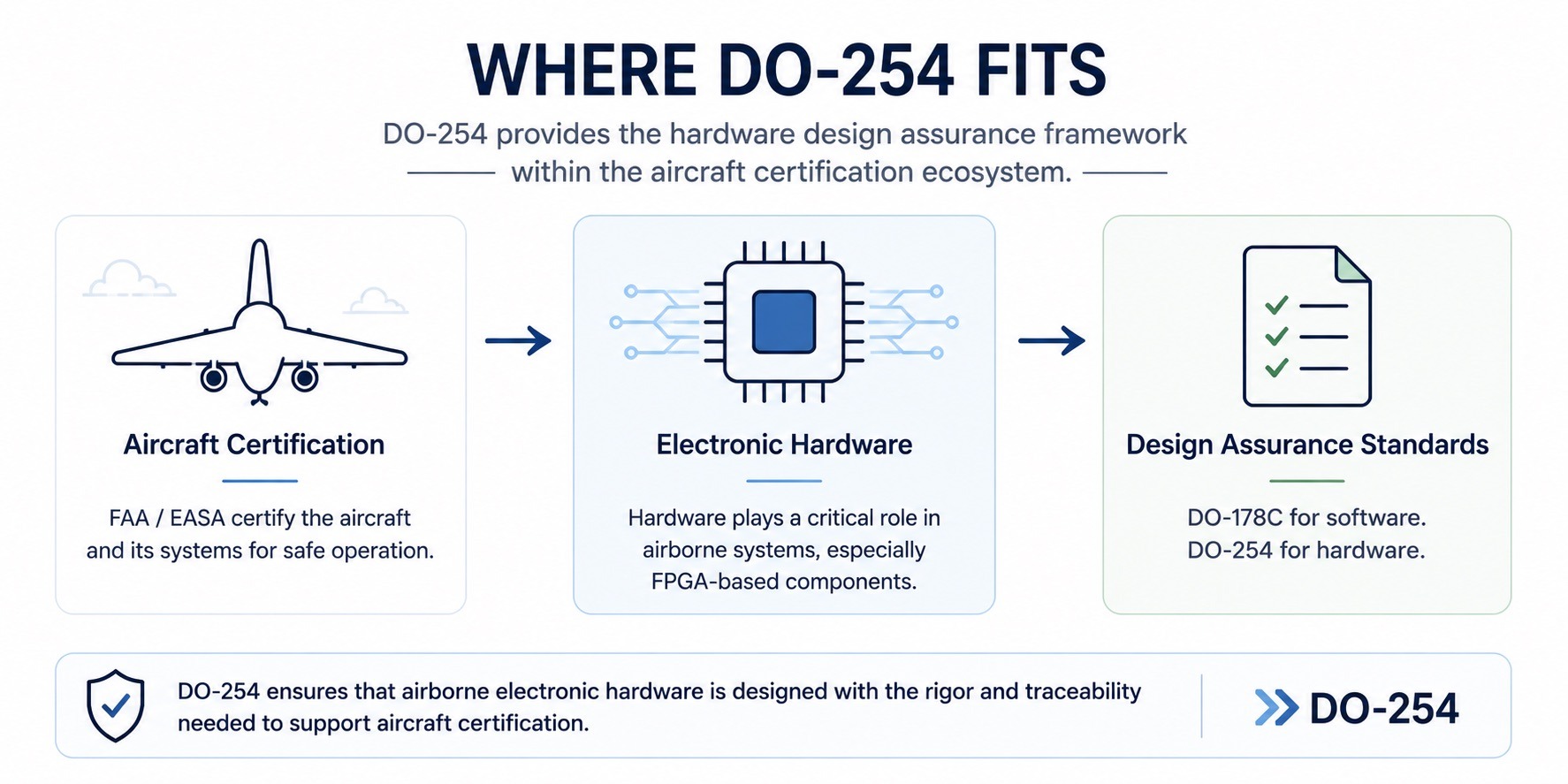
DO-254, formally known as RTCA DO-254 / EUROCAE ED-80, is the primary aerospace design assurance guidance used for airborne electronic hardware. It provides a structured framework for developing complex electronic hardware used in aircraft systems whose failure could impact safety.
The standard is widely used throughout the commercial aerospace, defense, and avionics industries to support certification efforts involving programmable and complex electronic hardware such as FPGAs, ASICs, and custom avionics circuitry.
At its core, DO-254 exists to answer a critical aerospace question:
How can aircraft manufacturers and certification authorities gain confidence that complex airborne electronic hardware will behave safely and predictably under all intended operating conditions?
As modern avionics systems became increasingly dependent on programmable hardware, traditional testing approaches alone were no longer sufficient to demonstrate design integrity. DO-254 was created to establish disciplined development, verification, traceability, and design assurance processes capable of supporting increasingly complex airborne systems.
What Does DO-254 Stand For?
DO-254 is the designation assigned by RTCA, an organization that develops technical guidance used throughout the aerospace industry.
The full title of the document is:
Design Assurance Guidance for Airborne Electronic Hardware
In Europe, the equivalent designation is EUROCAE ED-80.
Although commonly referred to simply as “DO-254,” the document itself is not a law or regulation. Instead, it serves as industry-accepted guidance recognized by certification authorities such as:
- The FAA (Federal Aviation Administration)
- EASA (European Union Aviation Safety Agency)
Aircraft manufacturers and avionics suppliers use DO-254 processes to help demonstrate compliance during certification programs.
Why Was DO-254 Created?
Aircraft systems once relied primarily on simpler electronic designs whose functionality could often be validated through direct testing and inspection. Over time, avionics hardware became dramatically more sophisticated.
Modern aerospace systems now depend heavily on:
- Programmable logic
- High-speed digital interfaces
- Complex FPGA architectures
- Multi-function processing systems
- Integrated avionics platforms
- Advanced display and communication systems
This increasing complexity created a major certification challenge.
Traditional hardware assurance methods were no longer adequate for demonstrating that highly programmable airborne electronics would operate safely across all required conditions.
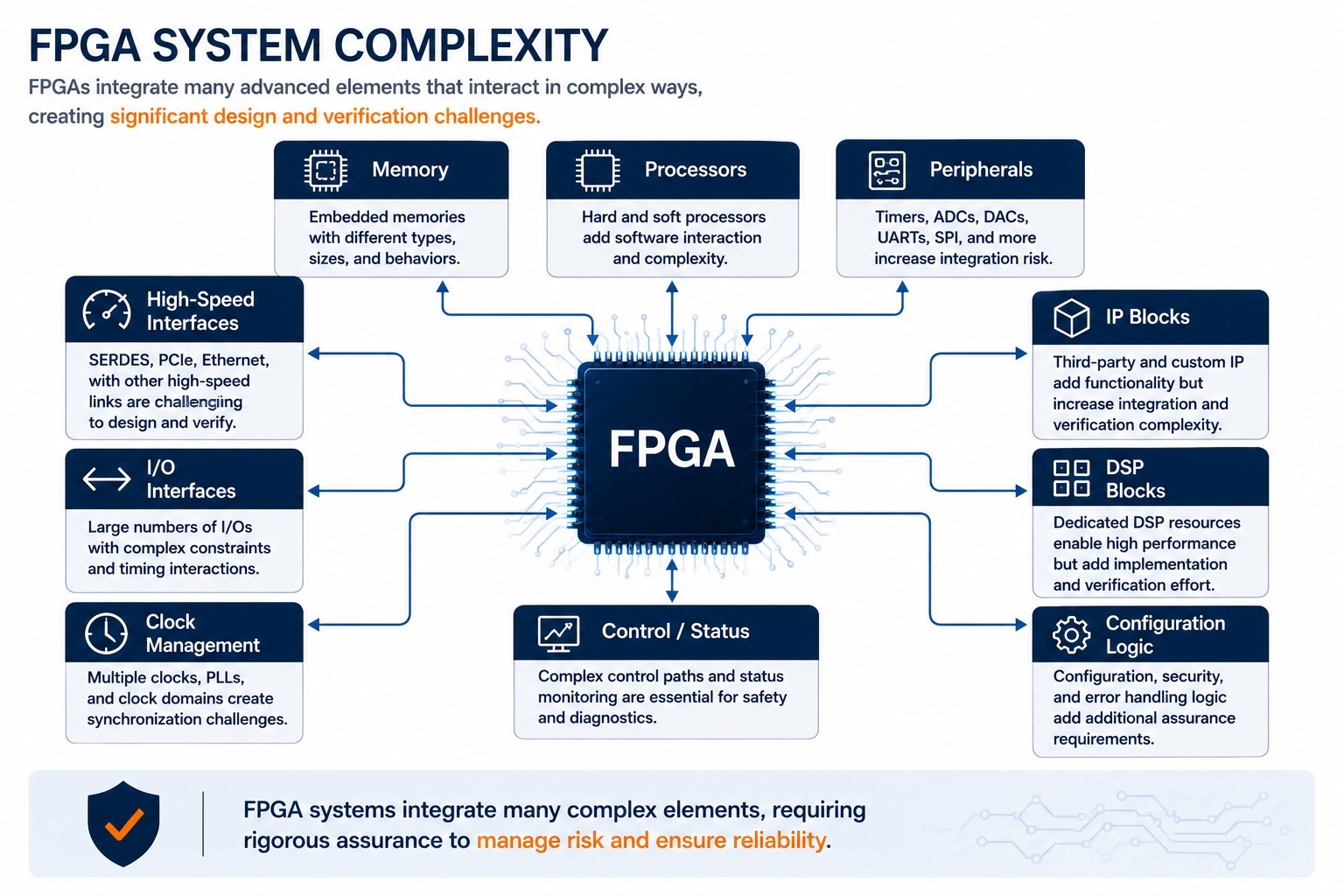
Unlike simple fixed-function circuitry, programmable hardware can contain:
- Thousands or millions of logic elements
- Highly configurable architectures
- Multiple clock domains
- Advanced state machines
- Embedded processors
- Reusable third-party IP
- Large verification environments
DO-254 was introduced to address this complexity by emphasizing disciplined engineering processes and requirements-driven development rather than relying solely on end-product testing.
What is Airborne Electronic Hardware?
DO-254 applies to airborne electronic hardware (AEH), particularly hardware that performs aircraft-related functions whose failure could affect operational safety.
Examples of airborne electronic hardware may include:
- Flight display electronics
- Navigation hardware
- Communication systems
- Data acquisition systems
- Sensor processing hardware
- Flight control electronics
- Video processing systems
- FPGA-based avionics platforms
- Custom interface hardware
The standard is especially important for hardware that performs critical or safety-related functions within an aircraft system.
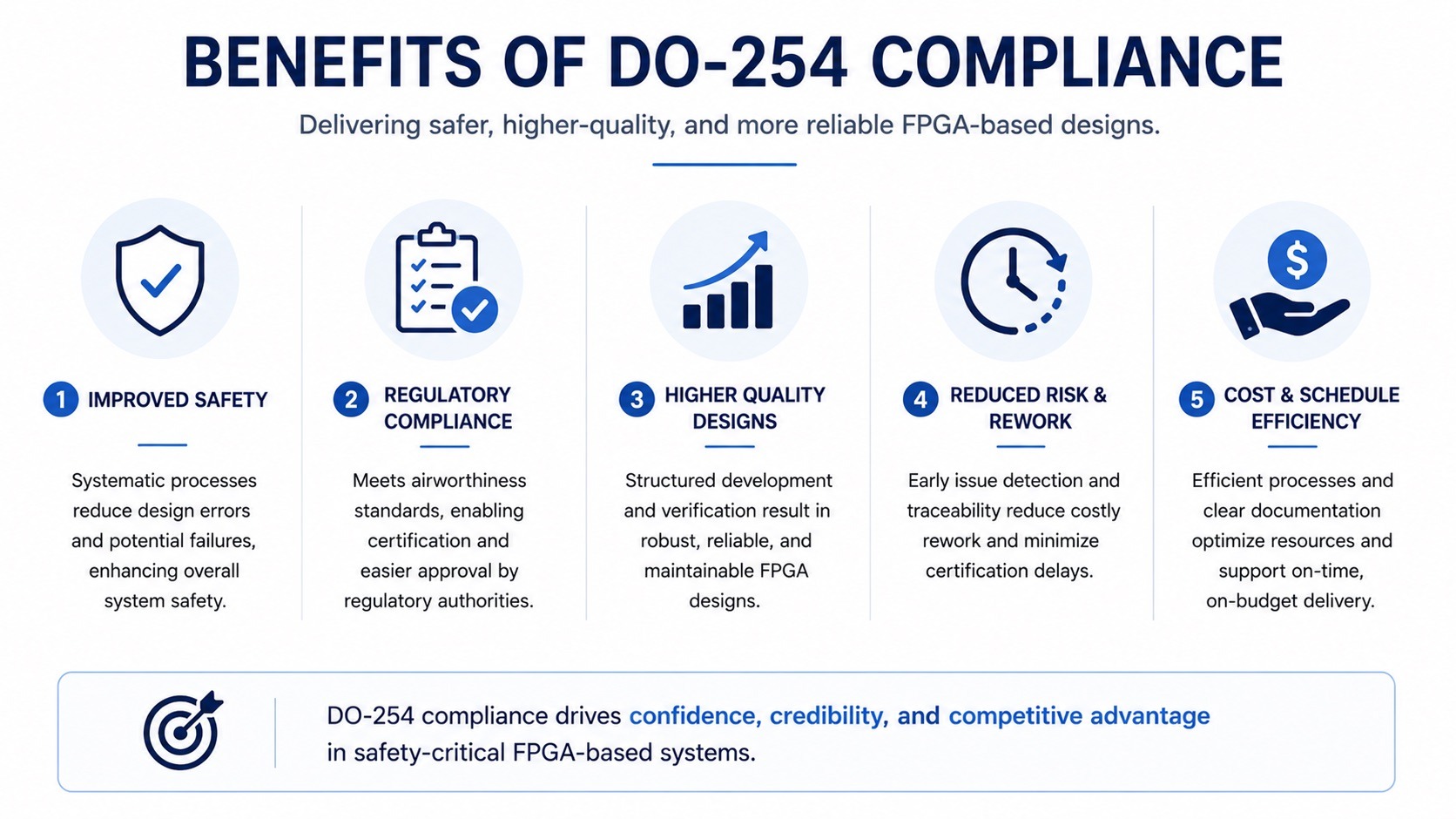
Not all airborne hardware requires the same level of design assurance rigor. The required assurance level depends on the potential effect of a hardware failure on aircraft safety.
Why FPGAs Became a Major Focus of DO-254
Although DO-254 applies broadly to airborne electronic hardware, the standard became heavily associated with FPGA certification due to the rapid growth of programmable logic within avionics systems.
FPGAs offer major advantages for aerospace systems, including:
- Deterministic behavior
- High-speed processing
- Hardware-level parallelism
- Long lifecycle adaptability
- Flexible interface support
- Reconfigurable architectures
As FPGA capability expanded, so did certification complexity.
Modern FPGA devices can implement functionality that previously required multiple hardware boards or processors. In many cases, FPGA logic now performs highly critical airborne functions directly related to aircraft operation and safety.
This introduced new certification concerns involving:
- Verification completeness
- Requirements traceability
- Configuration management
- Tool dependence
- IP reuse
- Complex state behavior
- Multi-clock interactions
As a result, FPGA-based systems became one of the most technically demanding areas of DO-254 compliance.
The Philosophy Behind DO-254
One of the most important aspects of DO-254 is that it is fundamentally process-oriented.
The guidance is not simply concerned with whether the hardware appears to function correctly during final testing. Instead, it focuses on whether the hardware was developed through a disciplined, traceable, and verifiable engineering process capable of producing safe airborne systems.
This philosophy is based on a key aerospace principle:
Confidence in airborne hardware safety comes not only from testing the final product, but from controlling and verifying the entire development process.
DO-254 therefore emphasizes:
- Requirements-driven development
- Independent verification activities
- Traceability between requirements and implementation
- Controlled configuration management
- Structured lifecycle planning
- Verification rigor
- Design integrity
The goal is to reduce the likelihood of hidden design defects, unintended behavior, or incomplete verification escaping into certified airborne systems.
DO-254 and Aircraft Certification
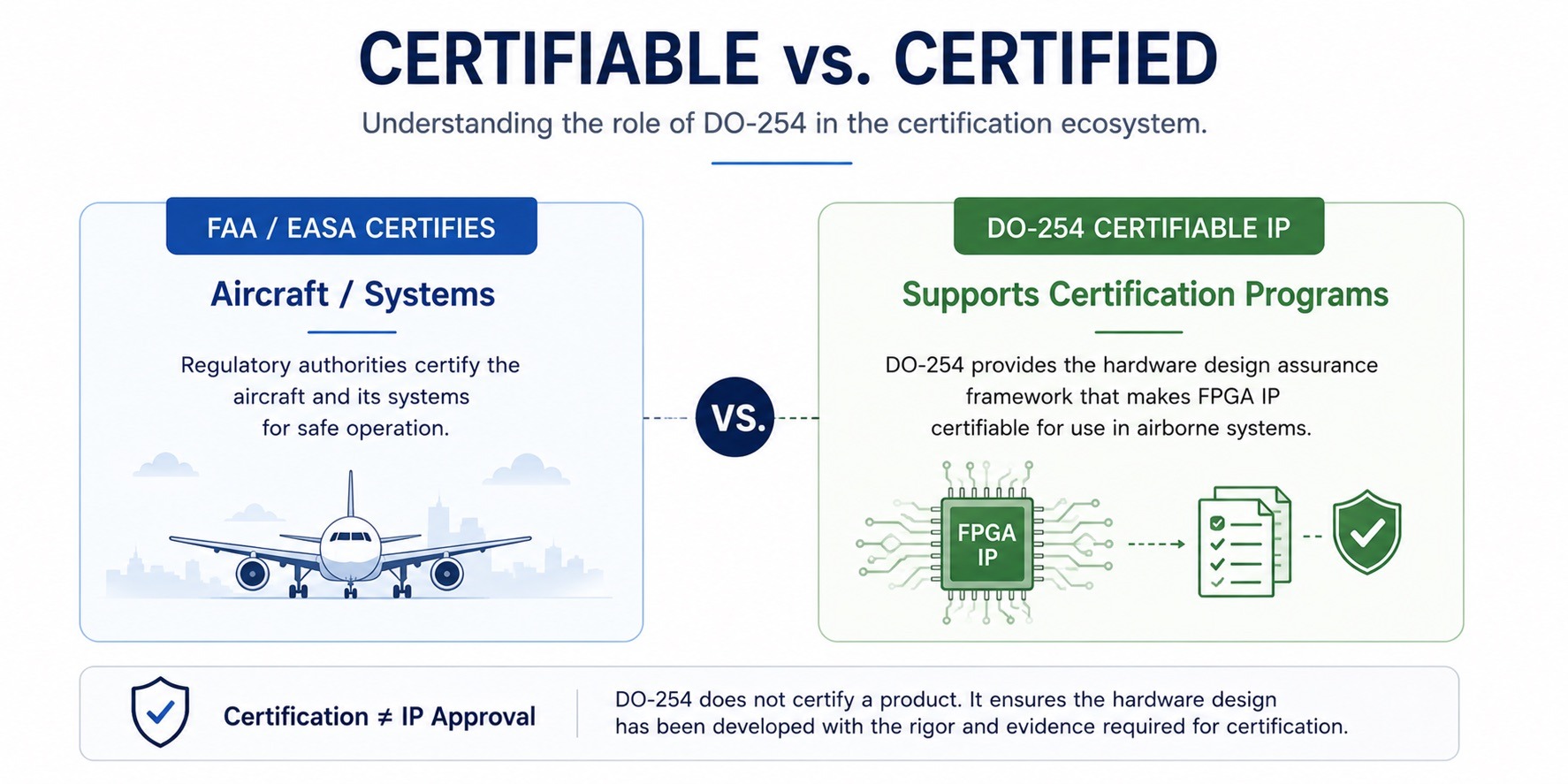
DO-254 itself does not “certify” hardware products.
This is a common misunderstanding.
Aircraft certification is ultimately granted by regulatory authorities such as the FAA or EASA for complete airborne systems, aircraft, Technical Standard Orders (TSOs), or Supplemental Type Certificates (STCs).
DO-254 instead provides accepted guidance used to support certification efforts involving airborne electronic hardware.
In practice, aerospace companies use DO-254 processes and lifecycle artifacts to demonstrate that airborne hardware was developed with sufficient rigor to satisfy certification expectations.
These artifacts may be reviewed during certification audits and compliance assessments conducted throughout a program lifecycle.
Why DO-254 Matters Today
As aircraft systems continue to evolve, airborne electronic hardware complexity continues to increase. Modern avionics increasingly depend on programmable logic, integrated processing architectures, and sophisticated digital communication systems.
Because of this trend, DO-254 remains one of the most important aerospace hardware design assurance standards governing the development of safety-related airborne electronics.
Organizations developing FPGA-based avionics hardware must often demonstrate not only that their systems function correctly, but also that they were engineered through disciplined, traceable, and verifiable development processes capable of supporting aircraft certification objectives.
Understanding what DO-254 is — and why it exists — is the foundation for successfully navigating modern aerospace hardware certification programs.
Where are you in your certification journey?
From early architecture decisions to final certification audits, every program faces challenges that can impact cost, schedule, and risk.
Whether you need certifiable FPGA IP, verification support, or complete DO-254 expertise, LogiCircuit can help you move forward with confidence.
Ready to move your program forward?
Whether you need certifiable FPGA IP, DO-254/178C consulting, verification support, or certification artifacts, our team can help.
Phone: 770-887-7293
Email: info@logicircuit.com
Request an Engineering Consultation

770-887-7293
Invoice Terms and Conditions
PO Terms and Conditions
Website Terms and Conditions
SafeIP™ License Agreement